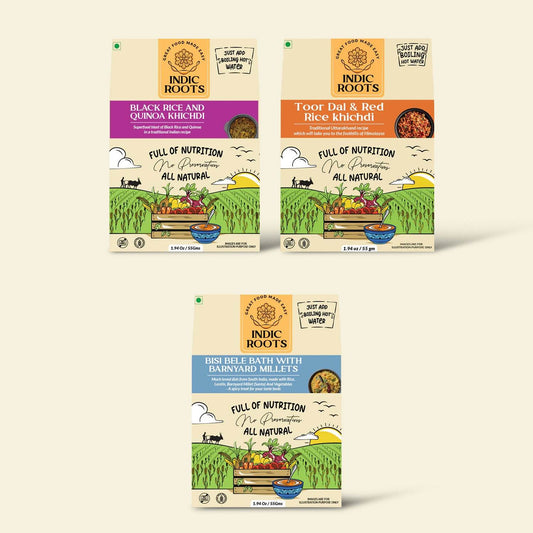
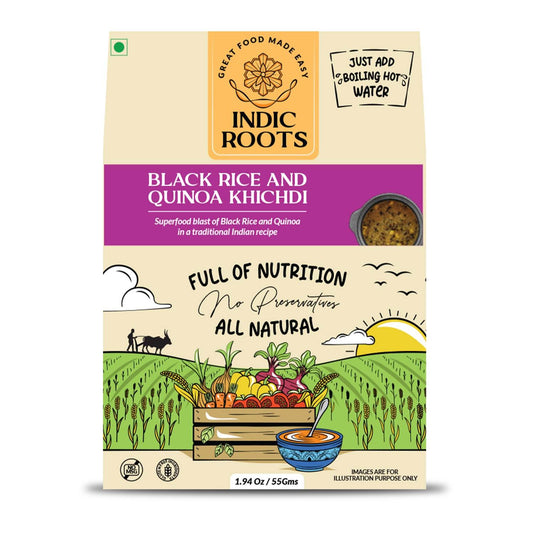

What’s on the back of a food pack matters far more than what’s on the front.
The front is designed to persuade you — multi-grain, high protein, made with millets, natural. The back is where the truth lives.
And once you know how to read it, you can’t unsee it.
What’s Really Inside Most Ready-to-Eat Foods
Most ready-to-eat foods today are built for three things: longer shelf life, better taste, and consistent texture.
To achieve this, brands rely on high heat processing, refining, extrusion, and chemical additives. That’s why many products stay on shelves for months, sometimes even years, without spoiling.
But this convenience often comes at a cost: the food is far removed from its original form, with chemicals hiding in plain sight!

These chemicals are often listed in coded, technical language that most consumers don’t recognise. You’ll see names like: INS 211 (sodium benzoate), INS 621 (MSG), INS 415 (xanthan gum), INS 330 (citric acid), nature-identical flavouring substances.
For most people, this list is confusing. And that’s the point.
Here’s a simple rule:
If it reads like chemistry, it’s probably not real food.
If it’s not something you’d use in your kitchen, it’s time to pause.
The One Rule Most People Don’t Know
Ingredient lists are not random. They’re written in descending order of quantity — from highest to lowest. Which means: the first ingredient is what you’re eating the most of.
This changes how you read everything.
Take a “multi-grain” snack as an example. If the ingredient list starts with maida and later goes on to list other grains, it’s not truly a multi-grain product. It’s primarily maida, with small amounts of other grains added in.
The front of the pack tells a story. The ingredient list tells you if it’s true.
What Real Food Looks Like on a Label
Once you start reading labels, you’ll notice something else. Real food is simple.

The ingredient list is short, familiar, and easy to understand: vegetables, pulses, grains, spices, ghee, real ingredients.
No codes.
No hidden additives.
No complicated terminology.
Nothing that needs decoding.
So, Why Does Checking the Label Matter?
Because what looks healthy on the front can be very different on the back. Because words like natural, wholesome, or multi-grain aren’t regulated in the way you might think.
And because, in the end, the label is the only place where a brand is required to be honest.
A Simple Way to Eat Better
You don’t need to memorise ingredient codes or study nutrition science. Just follow a few clear instincts
- Read the ingredient list
- Look at the first ingredient
- Choose foods you recognise
- Avoid what feels unnecessarily complicated
Over time, this becomes second nature.
The front of the pack sells you a promise.
The back of the pack tells you what you’re actually eating.
Read it. Understand it. Choose better.
That’s where real food begins.

Tags:
Verwante artikels

-
Oct 13 2026
Your hack to festive hosting: Gravies that do more
-
Sep 28 2026
The festive table starts long before the feast
-
Sep 24 2026