



Ask any Indian family what makes a festival feel like a festival, and food will probably come up in seconds. There’s the mithai that appears in every kitchen, the namkeen that somehow finishes before the guests arrive, and those little extras that are a must on the table - like ghee and achaar!
Ghee: Because some things just need a little Ghee
There’s something about ghee during the festive season that feels almost automatic. A little goes into halwa. A spoonful finds its way into dal. Puri, paratha, sweets and somehow, ghee has a place in all of it.
And then there are those festive mornings when the kitchen is already busy, someone is frying something, someone is making chai, and the familiar aroma of ghee fills the house. That aroma alone can make you realise, okay, the celebrations have officially begun.
Ghee isn’t just an ingredient in Indian kitchens. It has been part of our food traditions for generations, passed down through recipes, rituals and family kitchens. And the only way to make real ghee is the original way - like our desi Bilona ghee. Hand-churned and made with pure cow’s milk.
Achaar: The side dish that steals the show
Let’s be honest, how often have you gone back for another bite of achaar when you weren’t even planning to? That little spoonful on the side can completely change a simple meal.
From mango and chilli to mixed vegetables, every household seems to have its own favourite. Some like it spicy, some prefer it tangy, and some families have a jar that has been around for so long that everyone knows exactly which shelf it lives on.
And achaar has a funny way of bringing people together. Put two families at the same table, and there’s a good chance someone will ask, “Where is this delicious achaar from?” Suddenly, you’re comparing notes and sharing recipes with a side of nostalgia.
During festivals, when there’s already so much happening on the plate, achaar brings that sharp, tangy kick that cuts through rich and festive foods. Sometimes, all a plate of dal, rice or paratha needs is one good spoonful of achaar.
Honey: A little sweetness beyond mithai
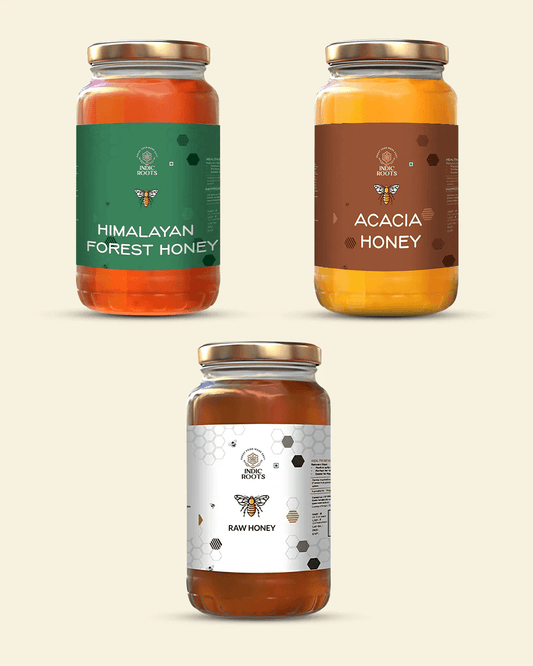
Festivals and sweets go hand in hand. But sweetness in Indian kitchens doesn’t always have to come from a box of mithai. Shehad, or honey, has been used in Indian food traditions for centuries, in drinks, homemade preparations, desserts and everyday breakfasts.
A drizzle over warm toast, stirred into a drink, added to a festive recipe or simply enjoyed with something savoury, there are plenty of ways to bring it into the kitchen.
And with so many varieties available today, from floral and light to deeper, more distinctive flavours, honey can be an interesting pantry staple to explore beyond its usual uses. It also makes its way into many homes as something simple to keep around when you want to add a touch of sweetness without reaching for the sugar jar every single time.
Whether it’s mixed into a warm drink on a festive morning or used to add a little sweetness to a homemade preparation, shehad has a place that goes beyond the festive dessert table.
The little things that make a festive kitchen
Festive food doesn’t always have to be elaborate.
Sometimes, it’s the ghee melting over hot food, the achaar sitting quietly in its little bowl, or a jar of shehad waiting on the kitchen shelf that makes the spread feel complete.
These are the ingredients that have been part of Indian kitchens for years, familiar, versatile and deeply connected to the way we celebrate food.
They also remind us that festive cooking isn’t only about following recipes. It’s about habits, memories and those small food traditions that somehow get passed from one generation to the next.
Because when the festivities begin, we don’t just cook more.
We bring out the flavours we grew up with.
Tags:
Previous
Your itinerary has a plan. Your meals should too.
Next
Your hack to festive hosting: Gravies that do more
Verwante artikels

-
Oct 13 2026
Your hack to festive hosting: Gravies that do more

-
Sep 24 2026