
Walk into any supermarket today, and you’ll see shelves full of “ready-to-eat” options. At first glance, they all promise the same thing: quick, convenient food. But here’s what most people don’t realise:
Not all ready-to-eat food is made the same way.
And the difference isn’t just the recipe or ingredients. It’s the technology used to preserve it.
The Real Difference Lies in How Food Is Made Shelf-Stable
For food to last weeks or months without spoiling, something has to change. That “something” is how the food is processed. Today, most ready-to-eat meals fall into three broad categories:
- Powdered/air-dried mixes
- Retort (pre-cooked pouch meals)
- Freeze-dried meals
They may sit next to each other on a shelf, but they are fundamentally different.
1. Powdered & Air-Dried Foods: Light, but heavily processed
These are the most familiar formats:
- instant noodles
- soup powders
- ready mixes
The process involves drying food using heat and breaking it down into powders.
What this means:
- Some nutrients are lost during drying
- Flavour often needs to be rebuilt
- Additives like carriers, flavour enhancers or fillers are commonly used
- Texture doesn’t resemble the original food
These products are convenient and affordable — but they are far removed from how the food originally looked and tasted.
2. Retort (Pre-Cooked Packaged Meals): Closer to real food, but heavily heat-processed
This is the most common format for ready-to-eat Indian meals.
Think:
- dal makhani pouches
- ready rice meals
- packaged curries
The food is cooked, sealed in a pouch, and then heated at high temperatures to sterilise it.
What this means:
- The food becomes shelf-stable
- But high heat can affect flavour, texture and nutrients
- Texture often becomes soft or mushy
- Additives like thickeners or stabilisers may be used to maintain consistency
- Sodium levels are often higher to enhance flavour
Retort meals are a step closer to real food, but the process still changes the original dish.
3. Freeze-Dried Meals - The Indic Roots Standard: Real food, preserved differently
Freeze-drying takes a different approach.
Instead of using high heat, the food is:
- Cooked using real ingredients
- Frozen at very low temperatures
- Dried by removing moisture under vacuum
What this means:
- The structure of the food remains largely intact
- Flavour, texture and nutrients are better preserved
- Fewer additives are needed
- The food remains lightweight and shelf-stable
In simple terms:
We just remove the water. When hot water is added back, the meal returns close to its original form.
Why This Matters
The way food is preserved determines:
- what ingredients go into it
- how it tastes
- how it feels
- and how much of its original nutrition remains
It also explains why some packaged foods need:
- flavour enhancers
- thickeners
- preservatives
while others don’t.
The next time you pick up an instant food product, don’t just look at the dish on the front.
Turn the pack around. Read the ingredients. And more importantly, understand how it was preserved.
Because the real difference is how that dish was made shelf-stable.
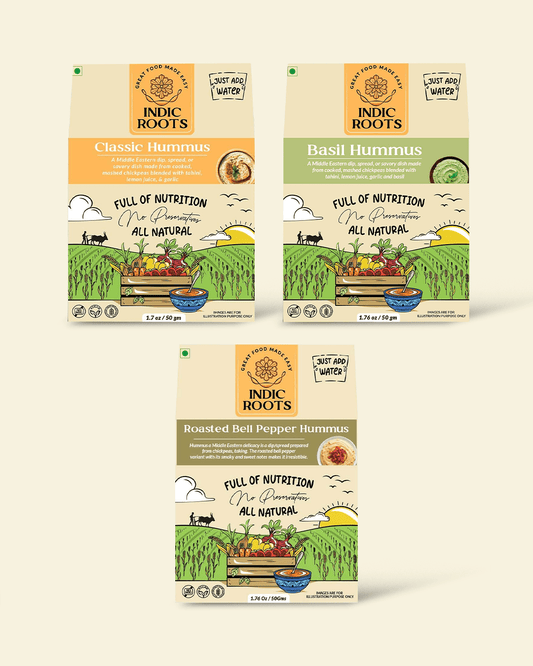
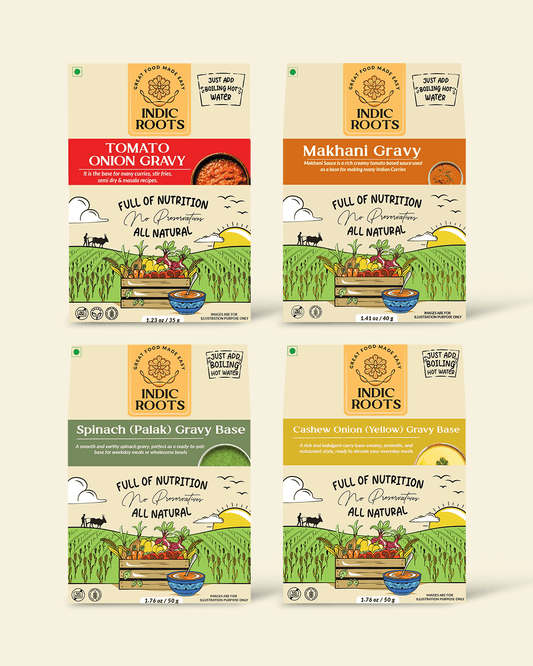
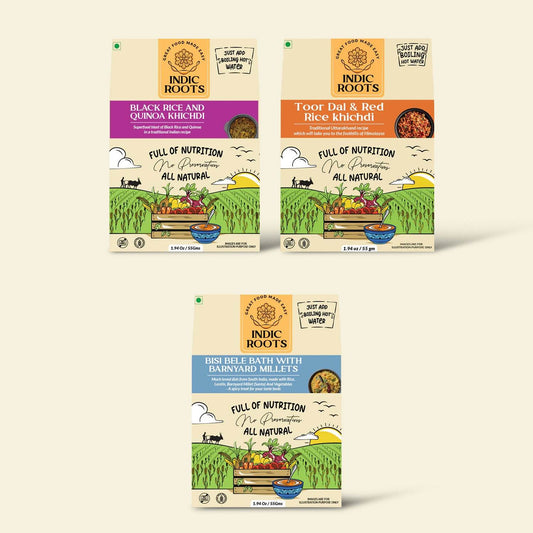
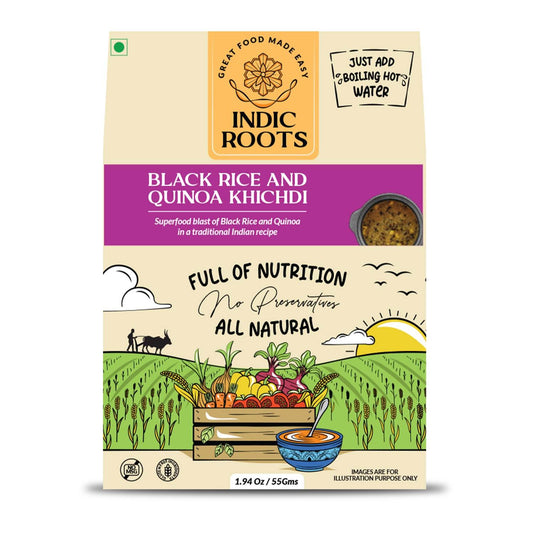
At Indic Roots, we use freeze-drying to preserve our meals.
By removing only the water at low temperatures, we’re able to keep the structure of the food intact, which means:
- real ingredients
- natural flavours
- better nutrient retention
- no preservatives
- no unnecessary additives
In simple terms:
You’re eating real food. Just without the water.
And that’s the difference.

Tags:
Previous
Indic Roots SOUPer Stars #1 - Chickpea & Sweet Potato: A bowl designed to nourish and restore
Next
Pickles, made in Punjab
Related articles
-
Sep 28 2026
The festive table starts long before the feast
-
Sep 24 2026